In 1985, as personal computers flickered in garages and *Whole Earth Review* still believed in the counterculture’s promise, Stewart Brand and Larry Brilliant founded the WELL—Whole Earth ’Lectronic Link—on a borrowed mainframe in Sausalito. It wasn’t meant to be a social network. It was meant to be a *public sphere*, a digital successor to the Whole Earth Catalog’s belief that tools could empower individuals and communities [1]. The vision: a place where informed, civically minded people could talk about ideas, technology, and culture—no ads, no anonymity, just real names and real consequences.
The WELL launched with a few hundred users, mostly Bay Area intellectuals, hackers, and environmentalists. Conversations unfolded in “conferences”—text-based forums on everything from Zen to nuclear policy. Early users like Howard Rheingold would later coin the term “virtual community,” but in 1985, it felt less like cyberspace and more like a very slow, very earnest dinner party where everyone typed.
Its context was crucial: pre-web, pre-Google, when the internet was still ARPANET’s nerdy cousin. The WELL offered something radical—connection without commodification. Users paid a monthly fee; there was no data mining, no viral content. The culture prized clarity, civility, and depth. Irony was suspect; sincerity, almost mandatory.
But as the 1990s dawned and the web exploded, the WELL’s model began to seem quaint. AOL offered flashy chat rooms and instant messaging. The WELL offered 14,400-baud modems and eight-page posts about *Moby-Dick*. Yet it endured. It became a relic, then a legend—a place where flame wars raged with the intensity of theological debates, where divorces were processed in threads, where people confessed addictions and got advice from strangers who knew their real names.
By the 2000s, the WELL was no longer influential, but it was *historically* significant. It proved that online spaces could foster genuine discourse—if you built them with intention, not profit. It anticipated today’s debates about digital identity, echo chambers, and the erosion of public conversation. The WELL didn’t predict Facebook or Twitter, but it asked the same question: *Can we be human together in text?*
Now, as social media collapses under its own weight—algorithms, outrage, performative identity—the WELL stands as a ghost in the machine. Not a utopia, but a cautionary tale and a quiet ideal: that community isn’t about scale, but about accountability. That conversation, even in ASCII, matters.
It was never perfect. It was often insufferable. But for a moment, in the amber glow of early screens, the WELL believed—and made others believe—that the internet could be more than a marketplace. That it could be a town square.
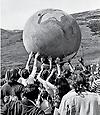
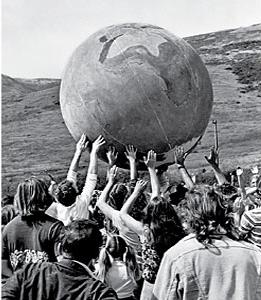
[1] A clear inspiration for littlebiggy given the default user photo taken from the catalog (people under the influence of something pushing the earth uphill).